

Two Hong Kong officials have condemned “groundless accusations” against a recent update to the city’s homegrown national security law, which empowers the chief executive to certify any criminal case as a national security offence.
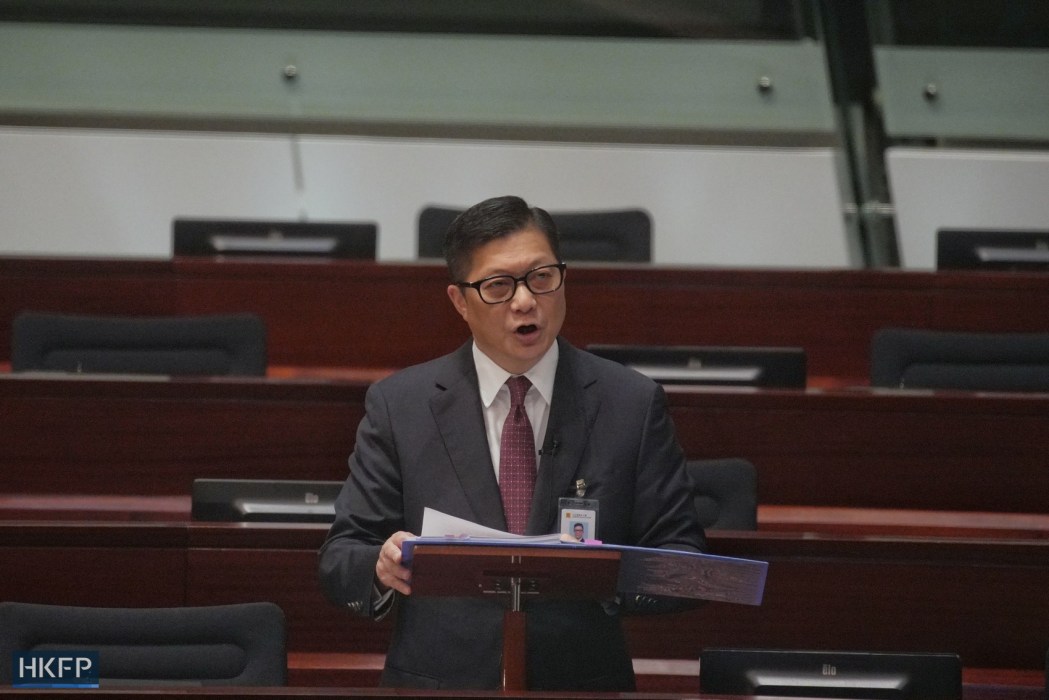 Secretary for Security Chris Tang speaks at LegCo. File photo: Kyle Lam/HKFP.
Secretary for Security Chris Tang told the Legislative Council (LegCo) on Thursday afternoon that he noticed some people had misunderstood or “deliberately misinterpreted” the subsidiary legislation.
They tried to intimidate the public by claiming that the subsidiary law would widen the scope of national security offences, turning minor offences into national security crimes, he said.
The security chief called the accusations “false, misleading, deceptive, and scaremongering” and said some people were attempting to incite hatred towards the government.
“Some people delivered alarmist remarks, saying that the government can randomly certify any acts of the public as national security offences. Those people may have ulterior motives or are cruel-hearted, hoping to incite others’ hatred of the HKSAR,” Tang said in Cantonese.
Also speaking at LegCo, Secretary for Justice Paul Lam said he noticed “some media outlets with ulterior motives, foreign forces, and fugitives” had made “groundless accusations” against the national security law.
The two ministers delivered their remarks during LegCo’s first meeting to review the Safeguarding National Security (Procedural Matters) Regulation, a subsidiary legislation of the homegrown national security law, commonly known as Article 23.
Authorities enacted the subsidiary law through the “negative vetting” mechanism, which allows the law to be gazetted and to take effect before legislative scrutiny.
The law came into effect on Tuesday, one day after the government tabled the bill in LegCo.
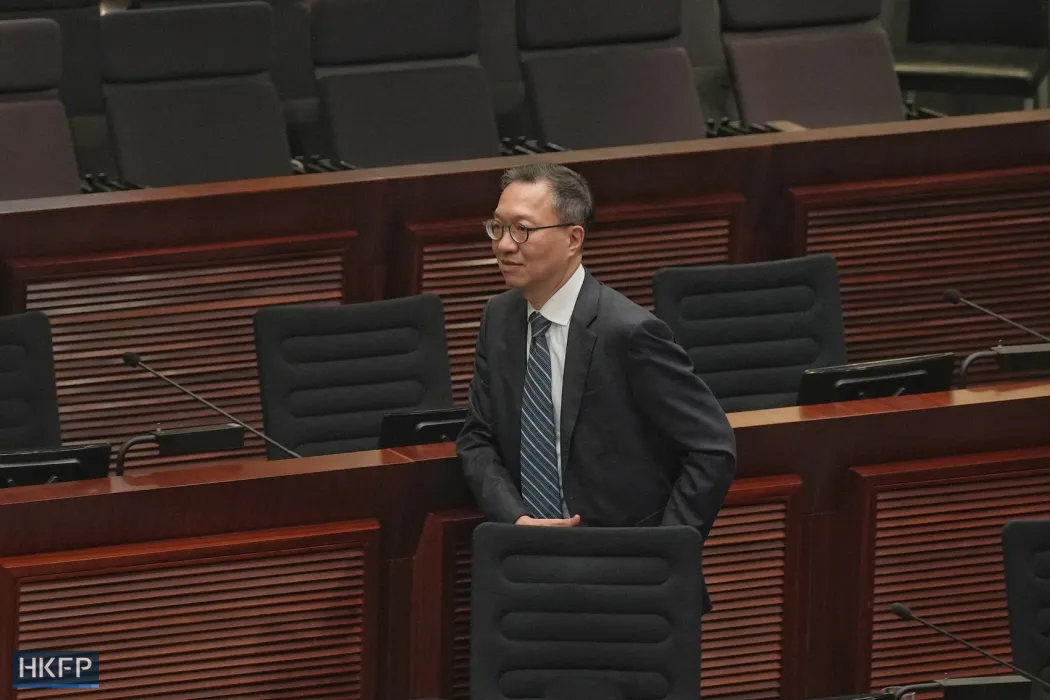 Secretary for Justice Paul Lam at LegCo. File photo: Kyle Lam/HKFP.
Lam, the justice chief, said that the subsidiary legislation was necessary to further explain articles in the Beijing-imposed national security law and Article 23, which stipulate that the chief executive should have the power to determine whether a criminal case involves national security.
In its proposal, the government cited the “legislative intent” of the Beijing-imposed national security law, saying that offences endangering national security include not only the four types of offences under the national security law, but also “other offences endangering national security under the law of the HKSAR.”
Lam said the recent legislative update was intended to further define “other offences endangering national security under the law of the HKSAR,” and it did not introduce any new power or new offences.
Earlier on Tuesday, Chief Executive John Lee said the new subsidiary legislation “is purely to make the law even clearer.”
 English (US) ·