
 54 minutes ago
3
This story was supported by the Pulitzer Center and the Fund for Investigative Journalism.
JOHANNESBURG, SOUTH AFRICA — When it opened in early 2024, Engage Men’s Health Clinic served as a free, one-stop shop for sexual health, gender-affirming medical care, and HIV prevention, testing, and treatment. Located within a short distance of seven universities, it was a place where many college students came before “they’d even had sex for the first time,” a former worker told The Intercept. This made Engage a “high-impact” clinic for distribution of the HIV prevention drug PrEP.
The building, on a tree-lined stretch of Reserve Street in Johannesburg, was adorned with the logo for the President’s Plan For AIDS Relief, or PEPFAR; a rainbow-colored mural of Simon Tseko Nkoli, the gay anti-apartheid activist who helped start one of Africa’s first Pride celebrations and who died of AIDS in 1998; and a sign for USAID saying the site was a gift “from the American people.”
Today, it would be very hard to get help here, despite the welcoming-but-outdated signage. The clinic, once staffed full-time by professionals, closed abruptly during the first hours of the second Trump administration. Its replacement, an unrelated volunteer clinic called USpace, is open a mere four hours a week. They can do HIV tests here. But they have no HIV treatment, HIV prevention, or gender-affirming medication to distribute.
South Africans account for about a fifth of the 41 million people living with HIV around the world. Out of a population of nearly 64 million, some 8 million people in South Africa are living with HIV, which is roughly 1 in 8. Managing their healthcare is a matter of international concern and requires global coordination and an immense local network. In a nation with such high rates of HIV, public health workers can’t just wait for people to walk into clinics; they must proactively go to them.
Yet over the last year and a half, this crucial work has been stymied. By Jacqueline Pienaar’s count, HIV prevention groups have lost track of approximately 20,000 people with HIV in the Johannesburg and Pretoria region alone since U.S. President Donald Trump came back to the White House. “It used to be if someone didn’t show up to get their medication, you’d go to them,” said Pienaar, a principal investigator and global health specialist at the Aurum Institute, an NGO that offers medical care and contact tracing for the region’s massive HIV-positive population.
For years, the U.S. Centers for Disease Control and Prevention funded her work. Many of her patients were homeless, unemployed, and extremely poor. If they are unaccounted for and unmedicated, their viral loads will spike, all but assuring large transmission increases in a country that is already home to 20 percent of the world’s HIV-positive population.
With U.S. funding vanished, South Africa now finds itself at risk of unmitigated HIV spread.
Now, at organizations like the Aurum Institute, interviews with Pienaar and other workers reveal how funding cuts have devastated the care apparatus. Employment in HIV care and prevention has become precarious, and resources to slow HIV transmission are increasingly scarce. As elsewhere in the world, this is creating a crisis of unemployment for Black LGBTQ+ workers, which itself creates higher risk for HIV. Gender-affirming care, which is a crucial tool for preventing HIV, has disappeared almost entirely.
Until the second Trump administration, the United States government sent a bit more than half a billion dollars a year to the Republic of South Africa. Of the $580 million the U.S. sent in 2024, 78 percent ($455 million) went towards HIV/AIDS.
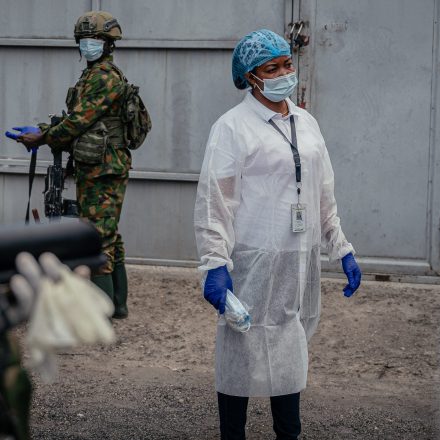
But this money from America was hardly charity or lacking in self-interest. Because viruses know no borders, what happens with AIDS in the country with the most infections affects everyone on Earth. Controlling HIV in South Africa makes the entire world safer by preventing the emergence of dangerous viral mutations, reducing the global burden of infectious diseases, and strengthening health systems that detect future pandemics. Because viruses mutate rapidly when allowed to replicate unchecked, poorly controlled epidemics anywhere pose a direct threat to global health security.
South Africa also leads the world on another important front: medical research to address HIV. The republic is home to more clinical trials than any other country for seeing how medications of all kinds (including Covid vaccines) impact those with HIV. The profits of American drug companies depend on South Africans undergoing research trials.
And after a year-and-a-half of dialing down HIV funding and only allowing it with many caveats which have caused major harm, the United States announced in June — during America’s LGBTQ+ Pride Month — that it will end all HIV funding in South Africa.
The ramifications of this will be felt globally for years to come.
They are already being felt by the millions of South Africans for whom HIV care has become harder and harder to find. And the effects are most severe for those already on the margins of South African society: those already living with HIV/AIDS, immigrants, trans women, and the poor, including thousands of newly unemployed HIV prevention workers.
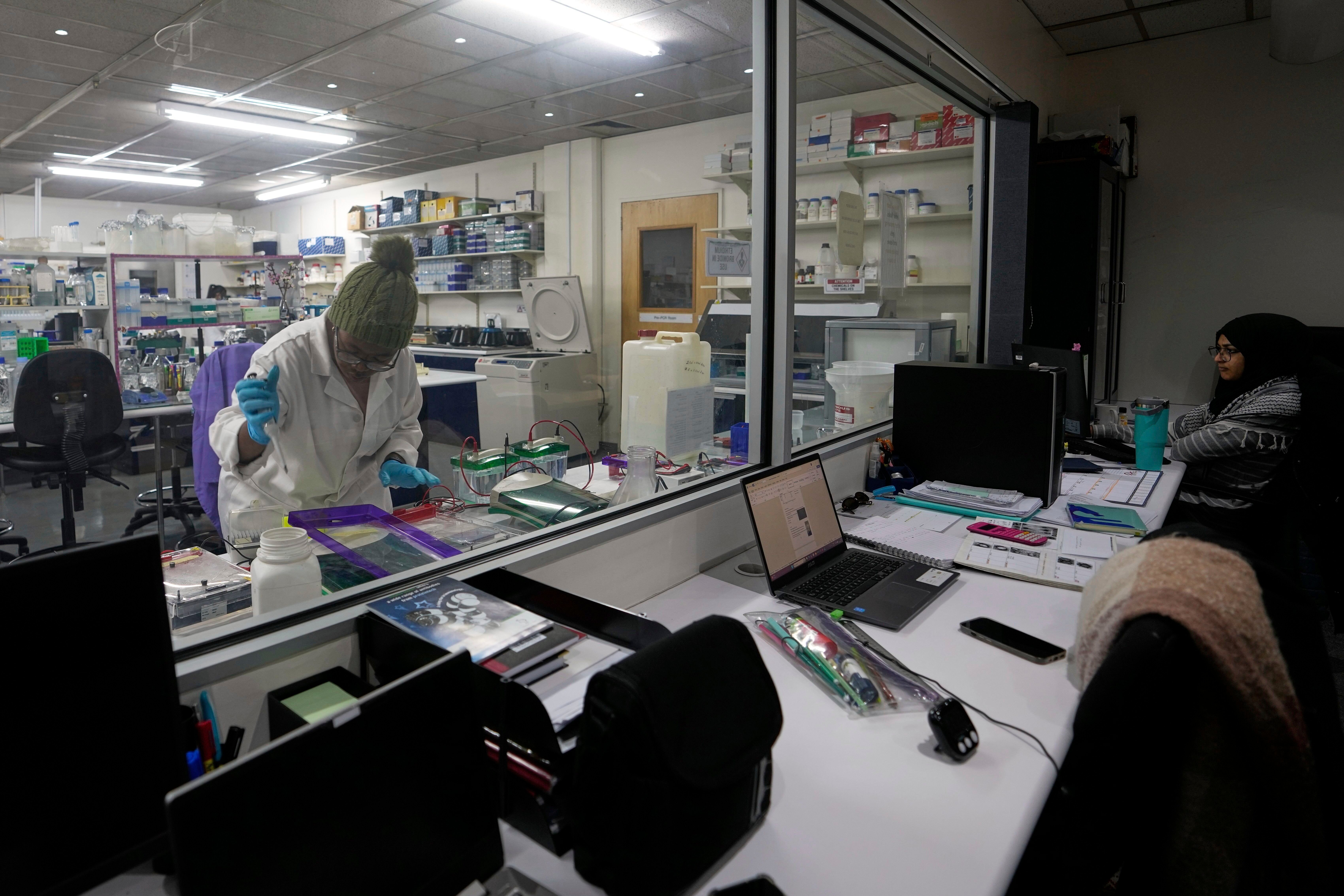 Laboratory technician Nozipho Mlotshwa works on samples at the Antiviral Gene Therapy Research Unit, at University of the Witwatersrand Medical School, in Johannesburg on May 22, 2025. Photo:Themba Hadebe/AP
On January 20, 2025, Trump signed two executive orders: 14169, “Reevaluating and Realigning United States Foreign Aid,” and 14168, “Defending Women from Gender Ideology Extremism and Restoring Biological Truth to the Federal Government.”
Within hours of Trump taking the oath of office, the vast majority of workers for OUT LGBT Well-Being, which ran the Engage clinic, were told not to come in to work the next day nor to even open their work laptops again. According to one, 82 of 86 workers were let go. They would become part of the one-third of South Africans who are already unemployed.
Trump executive order 14155 formally pulled the U.S. out of the World Health Organization in January 2026. Trump’s cuts came after the outgoing administration of President Joe Biden reportedly failed to pay some $130 million in 2024 WHO dues, leaving the organization with a $1.9 billion gap. As a consequence, WHO implemented a 30 percent reduction in its workforce.
South Africa’s response to HIV has been shaped by its two most famous citizens: Nelson Mandela and Elon Musk.
Mandela, the first president of the republic, played a large role making sure combating AIDS was part of national policy, even guiding the writing of gay, lesbian, bisexual and even trans rights into the constitution (the first constitution in the world to do so). Musk, for his part, can take credit for exacerbating the plague.
During Trump’s first term, with Musk merely cheering from the sidelines, U.S. funding for LGBTQ+ health and HIV did not decrease significantly, at home or abroad. But ahead of Trump’s second term, it was Musk who first recommended a U.S. “government efficiency commission” to Trump in 2024, planting the seeds for what was to come.

HIV funding nationally and globally have plummeted in Trump’s second term through cuts largely enacted at the behest of Musk’s short-lived Department of Government Efficiency. (These have been paired with an immigration policy so racist, over the last six months, literally the only refugees to enter the U.S. have been white South Africans.)
Musk quit just a few months into his tenure in 2025, before DOGE shut down entirely. He reportedly took a swath of DOGE data with him, saw his wealth skyrocket, and became the world’s first trillionaire. Reporting on mathematical projections about how many people have been or will be killed by the U.S. Agency for International Development, or USAID, cuts he pushed have ranged from hundreds of thousands to about 10 million to even tens of millions. (When Rep. Ro Khanna, D-Calif., accused Musk of executing “a death sentence for an estimated 4.5 million children around the world,” Musk threatened to sue him.)
“We have rights for trans women only on paper.”
But not all harm results in immediate, quantifiable fatalities. HIV-related deaths usually take many years to occur, and South Africans who die of HIV, or due to an increasingly transphobic healthcare system, are unlikely to be mourned in any numerically comprehensive database.
In South Africa, being trans is not a crime — it’s legally protected thanks to its 1996 constitution shaped by Mandela. And yet, as one trans HIV-prevention worker put it, “we have rights for trans women only on paper.” Because trans care was largely being financed largely by USAID, PEPFAR, and CDC research, when U.S.-money disappeared, trans care went away — along with a lot of the much-needed HIV prevention for everyone.
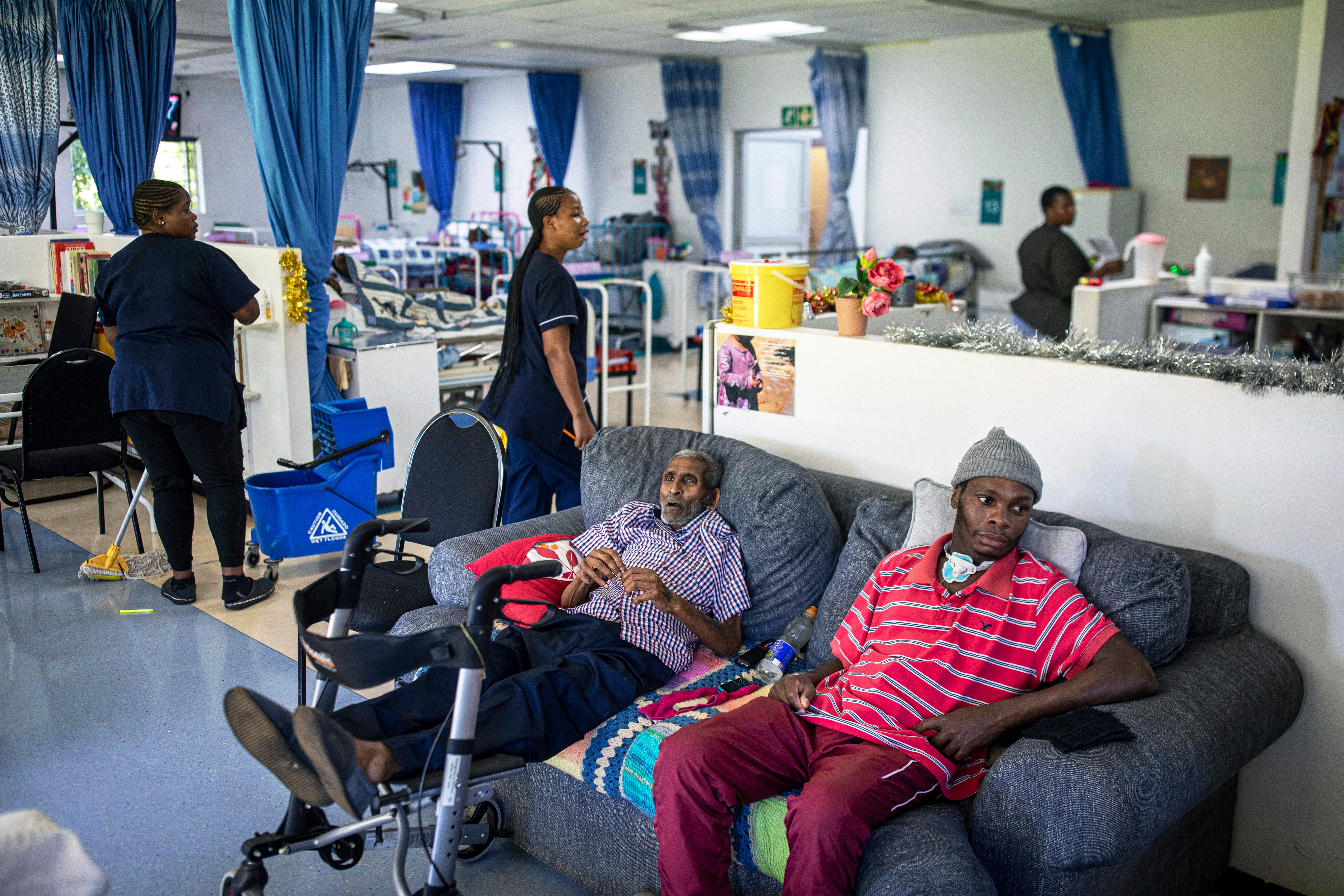 Patients watch a soccer game on TV in the hospice at Hillcrest AIDS Centre on Nov. 29, 2025, in Hillcrest outside of Durban, South Africa. Photo: Per-Anders Pettersson/Getty Images
In South Africa, LGBT Pride celebrations happen in the fall to connect gay history to the September 24 Heritage Day national holiday.
At last year’s Soweto Pride in the all-Black township where Winnie Mandela once lived, there were no corporate sponsors and zero presence from the U.S. Embassy or any U.S.-based NGOs.
It was here The Intercept first met Sibonelo Ncanana Trower, the worker at OUT LGBT Well-Being which had run the now-shuttered Engage clinic. He and his partner were wearing matching rainbow sweaters. Nearly nine months after being laid off, he was still looking for work — and it was one of his first times going to a gay event.
Though he was no longer getting paid, Sibonelo still was doing a lot of public health work for free, out of a sense of communal responsibility.
“If you go on Grindr — and I don’t suggest that you do, it’s too dangerous,” Sibonelo said, “you will see many of my former colleagues offering services.” People who had been trained as social workers and peer educators to provide care to sex workers were now working as sex workers. In an email to The Intercept, Sibonelo said he is back to working at OUT as of early June.
As the festivities continued, the almost entirely Black crowd danced to a mix of hip hop, rap, and dance hall on a grass field, bordered on one side by tents. Under the banner “The Queer Nation Has No Borders,” a group of volunteers and workers at the SafePlace International tent welcomed LGBTQ+ migrants and refugees and offered help for finding housing and work.
While Europeans are routinely worried about African refugees trying to cross the Mediterranean to Greece or Italy, SafePlace explained that most migrants in Africa are not trying to leave the continent at all — and most queer and African migrants fleeing legal persecution head down to South Africa. They try to go south because they’ve correctly heard that South Africa is legally good for queer Africans and that they can claim asylum. But they also come because they’ve heard — rather incorrectly — that South Africans welcome migrants. (In recent decades, migrants have faced great hostility in South Africa, especially in the lead-up to 2025’s G20 summit in Johannesburg, which Trump boycotted, and in increasingly bold xenophobic protests in 2026.)
Mpho is a lesbian from rural South Africa, and she spoke about a kind of refugee status few Westerners consider. Mpho explained that people who come from within South Africa to Cape Town, Durban, Pretoria or Johannesburg are often called immigrants, for their distinct cultures, languages (South Africa officially has 12 languages), and understandings of sexuality, gender, and being intersex. She herself knew she was different; but in her township, where there is not constant connectivity with mass media, she didn’t know anyone like her until she came to a big city.
Masi has had an even more challenging route. He is a trans man born in Zambia who made his way to South Africa, after surviving an arranged marriage and a community shunning.
Mpho and Masi have both known trans people who have experienced extreme body dysmorphia, including trans men who have started to have periods again once they lost access to hormone replacement therapy due to the Trump–Musk cuts. They know someone who has gone into the public health system, had their doctor leave the room in the middle of a genital exam — and then return with a group of colleagues to laugh at their body.
This has led to a wave of depression and suicides among their friends. Masi has made the difficult decision to only “socially transition.” He has chosen to dress and live as a man without hormonal or surgical intervention, because he does not want to begin any process that he can’t finish, or which could be taken away from him for any time.
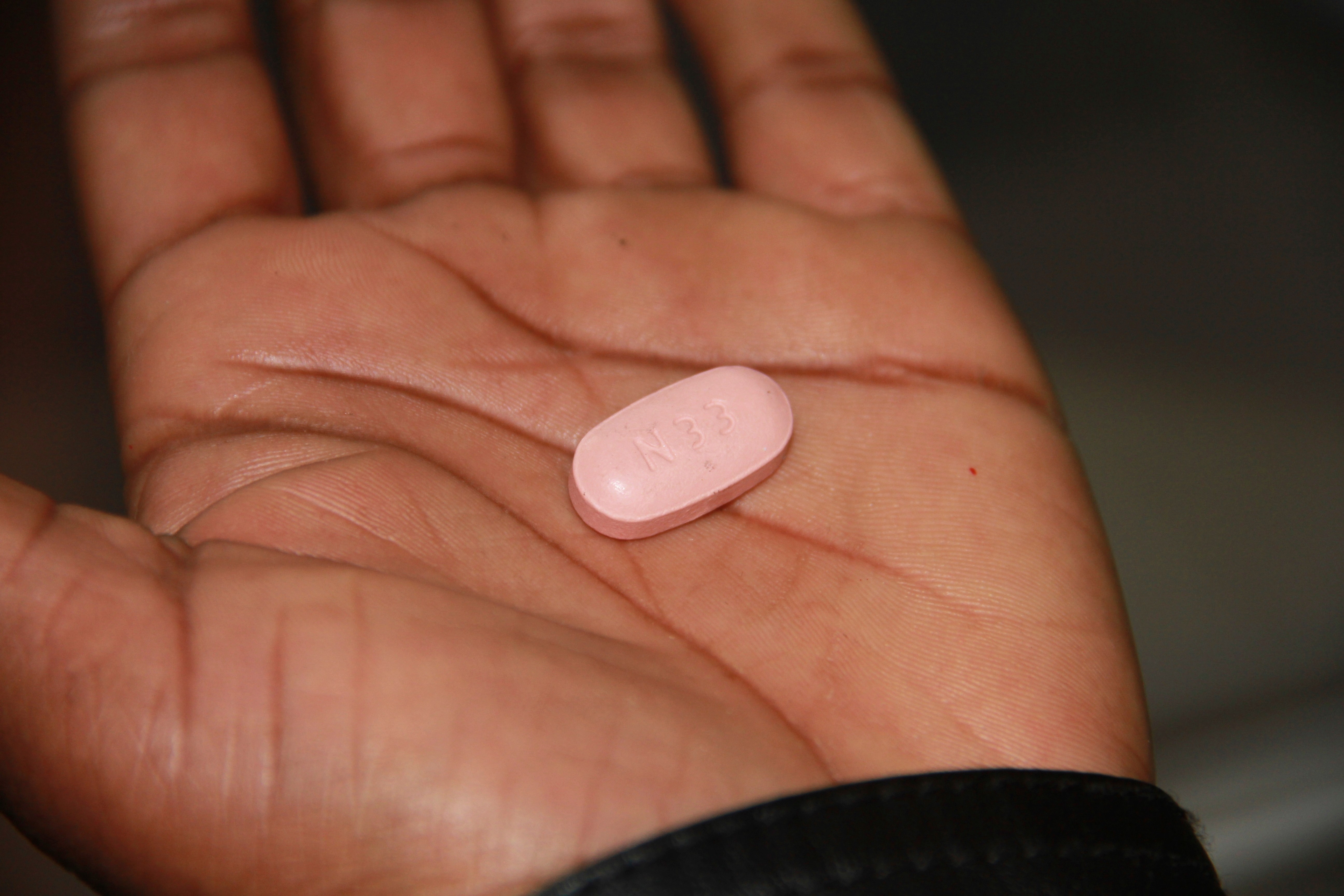 A 36-year-old HIV-positive sex worker and mother of one who requested anonymity shows a antiretroviral drug bought illegally on the black market in Johannesburg on June 20, 2025. Photo:Louise Dewast/AP
A few days later, Masi and Mpho drove into Johannesburg in a car early on a Saturday morning, decked out in “the queer nation has no borders” swag. With them was Mandi, a trans woman from Uganda. While Mandi waits for surgeries she plans to have, she has found a way to get estrogen — and stay on it — despite “the cuts.”
The three friends were on their way to perform an “Act of Kindness,” a part of SafePlace’s program where queer and trans people perform service projects which confer dignity upon each other. (SafePlace is privately funded, and like other privately funded NGOs, its work and workers are stressed in trying to meet the profound additional need in the wake of U.S. and WHO cuts.) Masi, Mpho, and Mandi would be serving lunch at a shelter for displaced queer women in the Vaal area, south of Johannesburg.

Mandi grew up assigned as a boy but knew she liked other boys. Uganda only made being gay a capital offense in the last couple of years, but it has been illegal in various forms since at least 2014. As in many places, Mandi’s legal problems did not come from random government surveillance; rather, she kissed a friend, whose parents found out, who told their school, who told the authorities, who arrested them both. This, in turn, outed Mandi to her family, who threw her out on the street. (She has never seen them again.)
Eventually, she made her way 5,000 kilometers by land to South Africa.
Mandi had an idea that South Africa “accepted people like me,” and while living on the streets of Cape Town (and then in the back of a restaurant where she did unpaid labor), someone pointed her to SafePlace. They found her a home, helped her get healthcare, and supported her in starting to live as a woman.
After crossing the Mandela Bridge, the roads shifted from highway to unpaved, red-clay-earth roads. They arrived in the Vaal and approached Orange Farm, an area well known to AIDS researchers for its high prevalence of HIV and for hosting many research studies, including the world’s first trial to see how circumcision could affect rates of HIV transmission.
Mpho, Masi, and Mandi pulled up to a nice home, double wide in size, which had a rainbow flag on its fence. This was the shelter where they’d be serving lunch.
The group set up a precarious gas stove in the garage and began cooking massive amounts of chicken, vegetables, and pap, the South African grain dish that is akin to Cream of Wheat in America or polenta in Italy.
Before the meal, Mandi got up in front of important community elders from the neighborhood and told her story. She implored them that the most important thing about having an LGBTQ+ child is to not kick them out and to stay connected. As a cautionary tale, she warned them that her elders now wanted her to return to Uganda to take care of them in old age — even after they’d abandoned her.
Gwendolyn Dube lives in the Orange Farm section of the Vaal, in a tin-roofed shack with no running water or electricity, not far from the Steve Biko Elementary School.
At 35, she has lived with HIV for more than 20 years; she was infected when she was raped as a child. She was among the first cohort of South African children to receive antiretroviral medication, or ARVs, in the early 2000s.
For many years, she received free medical care and ARVs at a clinic across the street from Eyethu Orange Farm Mall. It encompasses many buildings across a large campus, and its rooms are simple and very crowded. A small pride flag hangs on a poll beside the South African flag — both are at half mast, for no discernible reason.
While this is not officially an HIV clinic, Orange Farm has one of the highest rates of HIV anywhere in the world, and HIV is part of most medical care here. In a room with racked, connected plastic chairs like a bus terminal, signs read: “Are you or your child on ARVs? Do you know your VIRAL LOAD?”
Moving through the hall full of hundreds of mothers with children carried on backs in baby wraps, Gwendolyn recalled how difficult it’s become to get medicine. She used to get three months of treatment at a time, then two, then one. Then she was told there was no file for her.
“I think they say that when they’re overworked,” she said.
One of the workers behind the check-in desk told The Intercept that things have gotten much harder since the cuts: “We don’t turn people away. But we don’t have enough staff. People will come here and wait for 8, 10, even 12 hours — and sometimes they don’t even get to see someone about what they need.” (For people living in abject poverty, the loss of a day’s earnings can be devastating — especially if they have HIV and have to face this risk regularly.)
Another clinic worker shared that since the cuts, many visiting healthcare workers on U.S.-funded grants not only left, but also took their equipment with them.
“I used to send teams out every day. Now, it’s maybe once a week.”
The nurses of the clinic move with a military precision, even wearing military rank epaulets on their shoulders. The head of them is the “matron,” who, when asked by The Intercept, denied that they’ve run out of any medication, or that they turn people away (a claim Gwendolyn and others disputed). The matron conceded that sometimes people have to wait so long “they will leave” — and maybe don’t come back. She acknowledged that the clinic doesn’t always have the specific medication people need when they need it. She also bemoaned that it’s hard to keep staff, burnout and turnover are high, and that her mobile teams, which would go out into the townships, are severely limited.
“I used to send teams out every day,” she said. “Now, it’s maybe once a week.”
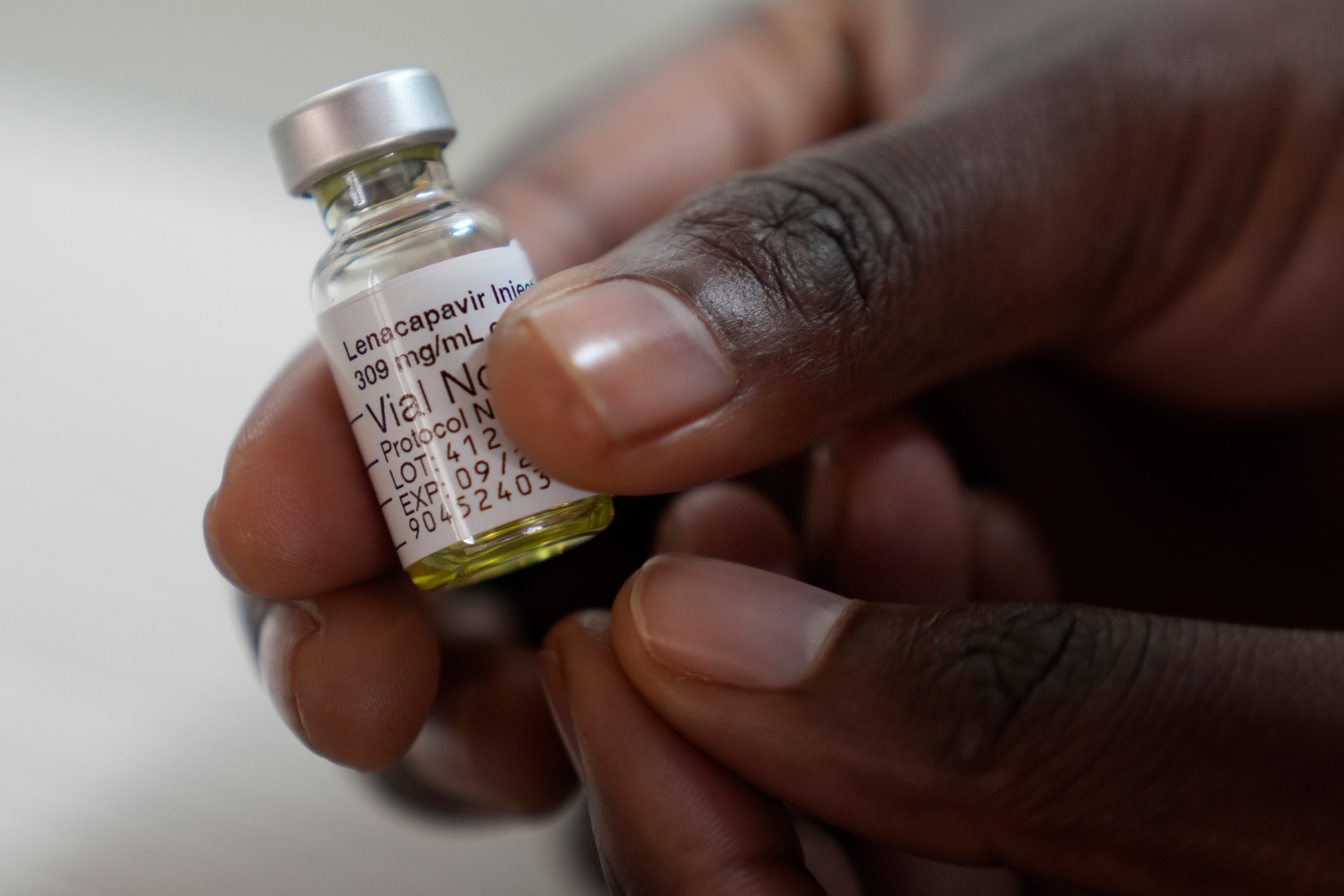 A pharmacist holds a vial of lenacapavir at the Desmond Tutu Health Foundation’s Masiphumelele Research Site in Cape Town, South Africa, on July 23, 2024. Photo: Nardus Engelbrecht/AP
Shon, a Black trans woman living with HIV, is still working at the Aurum Institute — at least for now. Unlike at the shuttered Engage clinic in Johannesburg, some staff remain in Aurum’s Pretoria office, but they decreased in number. As a result, Aurum is offering fewer services and steering patients to the public health system, where trans people receive little necessary care.
Aurum used to be a “one-stop shop” for trans women, Shon said. But now, after the cuts, doctors visits are no longer free and hormone drugs aren’t available at Aurum’s popular Pop Inn clinics. “The ladies do come to get [HIV medication], others come to get PrEP, but they cannot get hormones,” Shon said. “They’re told to go to a public clinic,” but “they don’t know anything about trans women!” Shon added that patients will be addressed with derogatory and incorrect terminology at such locations.
The stigma is too high to go to a public clinic, so Shon goes to a private doctor herself, when she can afford it. But getting hormones is now tough. While patients aren’t being blackmailed as they are in Uganda, “a pharmacist might say, ‘What do you need this for? No, I’m not giving it to you for that. I have other patients who really need it,’” Shon said.
Trans women are struggling, Shon said, recalling how she knew two “who were suffering from depression. One couldn’t take hormones, became really religious,” stopped hormones, and became suicidal. Another was suffering from liver problems after buying hormones on the contraband market, without the supervision of doctors.
Whenever transgender patients are taking contraband hormones via syringes which might not be sterile, they are being exposed to increased risks of contracting HIV and hepatitis — all because DOGE cuts took sterile medical care away from them.
Amid the devastating cuts to global HIV care, a potential breakthrough treatment is just beginning to reach patients. Lenacapavir, a new medication, promises to prevent HIV for six months with just one injection. But it comes with a prohibitively expensive $28,000-a-year price tag, making it out of reach for those who need it most.

Recently, the Global Fund for HIV, Tuberculosis, and Malaria struck a deal with pharmaceutical company Gilead Sciences to produce the shot for $40 in limited quantities. Small amounts are headed to South Africa.
At an outdoor cafe under a massive tree in the picturesque city of Cape Town, Fatima Hassan, a legal and HIV scholar, blasted the pilot study coming to the republic.
The government’s approach was “making the same mistake” of excluding those who were most affected: sex workers and men who have sex with other men.
The plan is to bring a one-time shipment of 40,000 doses — a woefully inadequate number for a country of more than 60 million people where about 1 in 5 adults is living with the virus is living with the virus.
Worse, only a tiny fraction — 5 percent, or 2,000 doses — is to be set aside for testing on men who have sex with men.
None are going to be set aside for sex workers.
And another problem: So many of the people who would be needed to distribute lenacapavir to the people who need it most — to the gay college students who used the shuttered Engage clinic on Joburg’s Reserve Street, to the trans women who went to the Pretoria Pop Inn clinic — have been fired. Without those workers, can South Africa even distribute the medication?
Steps from the cafe, within sight of well-appointed apartments topped with electrified razor wire and the Desmond Tutu Health Foundation, there is a shantytown of cardboard-and-wood dwellings, home to some 100 Black adults without anywhere else to live.
A conservative estimate means that probably at least 20 of them were living with HIV, if not more.
And because of Trump and Musk, the people who used to find them and treat them have been fired — and are at higher risk of HIV themselves.
The post How Trump Destroyed South Africa’s Effort to Slow HIV Transmission appeared first on The Intercept.
 English (US) ·