
 3 months ago
52
3 months ago
52
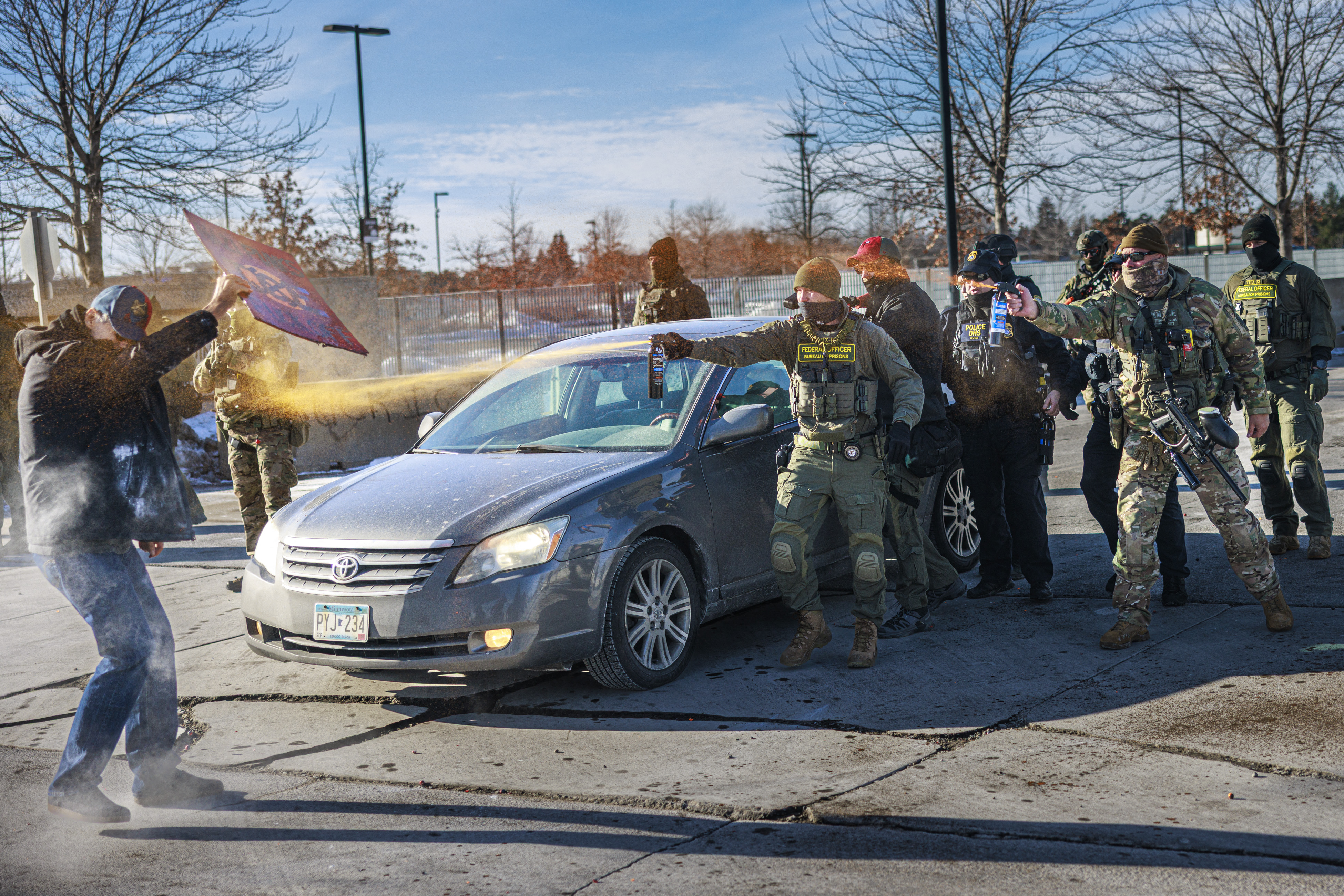 Federal agents pepper-spray a protester holding a sign during an enforcement operation outside the Whipple Building ICE facility in Minneapolis on Jan. 11, 2026 — four days after an ICE agent shot and killed Renee Nicole Good, leading to huge protests and outrage from local leaders who rejected White House claims she was a domestic terrorist. Photo: Kerem Yucel/AFP via Getty Images
Donald Trump’s Department of Justice unsealed a federal indictment on Tuesday announcing hefty charges against 15 anti-fascist protesters for alleged actions taken in response to the brutal U.S. Immigration Customs and Enforcement surge in Minneapolis earlier this year.
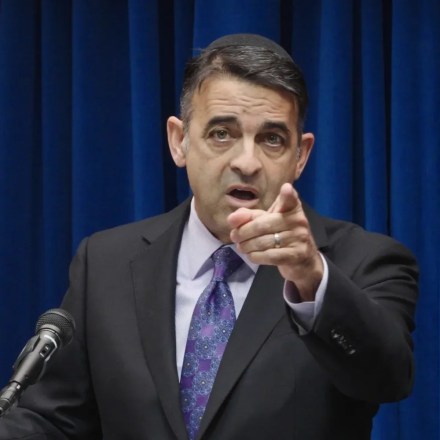
The federal prosecutor in the case, Minnesota U.S. Attorney Daniel Rosen, warned that more arrests and charges could follow.
Once again, prosecutors are throwing extreme and overreaching charges at activists in a scrambling effort to criminalize organized, collective opposition to Trump’s most violent policies.
The Minneapolis indictment exemplifies the Trump regime’s escalating strategy: Criminalize whole political movements with claims of collective liability and “conspiracy,” and treat typical acts of protest, constitutionally protected speech, association, and political identification as criminal acts.
Call it the spaghetti-against-the-wall approach.

The indictment, Rosen said, is a part of Trump’s National Security Presidential Memorandum-7, or NSPM-7, initiative to target and prosecute leftists and anti-fascists as terrorists.
Minneapolis is not an incidental target for Trump’s Department of Justice. The city unleashed an oftentimes-inspiring response to the ICE crackdown: mutual aid organizing, confrontational protest, blockades, and strikes in response to brutality set a national example for how to fight back when federal agents descend on a city to kidnap our immigrant neighbors.
“Conspiracy” to What?
The “conspiracy” in Minneapolis according to the government, involves purported antifa activists acting with the aim of impeding ICE operations and injuring officers. The indictment names no federal officer injuries, and only minor incidents of property damage — like a protester leaving a dent in an ICE vehicle from kicking it.
Among other pieces of evidence cited for the alleged criminal conspiracy are the most basic protest strategies, including self defense, nonviolent tactics, and First Amendment-protected activity.
The use of encrypted Signal chats to communicate protest plans is cited again and again in the indictment.
The government points out that organizers employed phrases like “become ungovernable” — a liberatory slogan so common it has spread to cute animal memes.
Demonstrators are accused of building and advocating for the use of shields at protests outside an ICE detention facility — the sort of protests in which, in Minneapolis and nationwide, federal agents have beaten people and fired rubber bullets and tear-gas canisters directly at heads and bodies.
The indictment even claims that people tracking ICE vehicles and alerting others to their presence, as agents prowled neighborhoods looking for immigrants to kidnap, is evidence of criminal conspiracy.
That certain protest activities may have indeed impeded ICE in its efforts to ruin lives and whiten the country do not make those activities illegal. Minor violations and property damage may involve unlawful acts, but do not constitute a mass criminal conspiracy.
Certainly, none of it calls for unleashing the vast resources of the federal government against protesters. The Trump administration, however, has made its own strategy clear: Make the stakes of association with political movements dangerously high.
And if the cases fall apart? Well then, movements have still been disrupted by lengthy, frightening, and expensive legal processes; anti-fascist political activity is chilled nonetheless.

Nationwide Assault on the Left
The Minneapolis charges do not stand alone. Recent weeks have seen an array of federal arrests, prosecutions and raids aimed at Trump’s favored targets: Anti-fascists, Palestine-solidarity activists, and voting rights advocates.
Protesters who participated in the Atlanta-based Stop Cop City movement were hit last week with new federal charges under the NSPM-7 initiative — despite the fact that state cases against the movement for the very same incidents have consistently collapsed.
This month, the FBI also raided the homes of numerous Palestine-solidarity activists connected to the University of Michigan, with eight activists indicted on federal charges for allegedly aiming to “intimidate” university officials in protests aimed at ending the school’s investment in Israel’s genocide. FBI agents also raided the offices of an Ohio voter-registration organization, seizing employees’ phones and computers.
These are unabashed authoritarian tactics to chill whole swathes of political activity, the likes of which have a long history in this country, from multiple Red Scares and the deadly COINTELPRO effort last century against Black-liberation struggle, to the mass repression in response to Black Lives Matter uprisings in the last decade.
Such repression is not the sole preserve of Trump’s regime or Republican administrations, but we are witnessing an escalation in authoritarian efforts to criminalize political resistance.
The assault on the left has been, perversely, carried out in tandem with brazen attempts to lavish Trump’s violent far-right supporters with impunity, government jobs, and even financial rewards.
When the Spaghetti Sticks
Sometimes the spaghetti does stick. In March, a Texas jury found eight defendants guilty of terrorism charges for simply being present and wearing black at a protest in which a shooting took place outside ICE’s Prairieland Detention Facility in Northern Texas.
The ruling was a major victory for the Justice Department — a case in a Trump-friendly jurisdiction, presided over by a Trump-appointee judge, the government’s flimsy effort won through.
In Spokane, Washington, three anti-ICE demonstrators were convicted in May on conspiracy charges for impeding federal officers in a case with similarities to the Minneapolis indictment. The original federal prosecutor in the Spokane case resigned instead of signing indictments against protesters; he did not believe they were warranted, he said. As is a pattern with Trump’s Department of Justice, however, the prosecutor’s successor moved forward with charges. Six people took plea deals, but three refused, wanting to defend their First Amendment rights in court. For typical protest activity, they were convicted of federal conspiracy charges. They face up to six years in prison.
Trump’s lawyers are not famed as skilled practitioners, but they know how to navigate an unjust system with brute force, willing to pour unending resources into crushing ideological enemies and symbols of resistance.
Trump has ample reason to relentlessly push politically motivated cases, even those thrown out in lower courts.
Just consider the extraordinary, ongoing efforts to deport Palestinian activists like Mohsen Madawi and Mahmoud Khalil, or a Salvadorian immigrant with legal status, Kilmar Abrego Garcia.
With an ideologically aligned far-right Supreme Court, Trump has ample reason to relentlessly push politically motivated cases, even those thrown out in lower courts.
Antidote to Collective Guilt
Cases like Prairieland threaten to set frightening precedents, but the lesson they offer is not that federal prosecutors have somehow now cracked the mass-prosecution code after other collective liability efforts had failed. Rather, the lesson is an older one, about solidarity.
Prosecutors in the Prairieland case relied heavily on the testimony of cooperating defendants, who testified against co-defendants as a part of plea deals. Without that testimony, the case would likely not have played out the same way.
“If people hadn’t cooperated in Prairieland, the case would’ve been extraordinarily different,” said Xavier T. de Janon, an attorney with the People’s Law Collective, which is representing Stop Cop City protesters in state-level cases. “Their entire prosecution was made possible by cooperators, and their investigation was successful because people cooperated very quickly.”
De Janon nonetheless stressed that, while the federal government was successful in the Prairieland trial, the Justice Department has accrued “hundreds of failures.”
“If people hadn’t cooperated in Prairieland, the case would’ve been extraordinarily different.”
In Stop Cop City cases so far, as was the case in the mass federal prosecution against the so-called J20 protesters at Trump’s first inauguration, no defendants aided prosecutors as cooperating witnesses. Efforts to isolate and criminalize “bad protesters” failed, and collective prosecutions, based on the flimsiest of claims, collapsed.
The response to ICE in Minneapolis and St. Paul was powerful precisely because residents blended tactics of mutual aid, community support, mass mobilization, and militancy. The worst possible response to the Justice Department’s sweeping indictment would be for certain elements of the movement to follow the government’s lead and demonize antifa associations and confrontational protest.
The government is escalating a well-worn strategy to disarticulate and defang movements.
“This is a fascist society, not just the government, but the fabric of society,” said de Janon. “People thinking, ‘If I go to a rally, I might be charged with a federal felony and spend 25 years in prison’ — it is outrageous.”
There is no denying that the Department of Justice is attempting to make the stakes devastatingly high for even minimal association with today’s liberatory movements, from anti-fascist immigrant defense to Palestine solidarity.
The price for failing to stand together against this fascist overreach is, however, far higher still.
The post Trump’s Spaghetti-Against-the-Wall Indictment Against ICE Protesters — and How to Fight It appeared first on The Intercept.
 English (US) ·